Torch down roofing employs modified bitumen, known for its durability and waterproof properties. The application process involves heating the underside of the membrane with a propane torch, allowing it to bond seamlessly to the roof substrate. This method not only enhances adhesion but also provides flexibility against temperature fluctuations. Understanding the intricacies of installation and its subsequent advantages reveals why this roofing solution stands out among others. What specific benefits contribute to its long-lasting effectiveness?
Key Takeaways
- Torch Down Roofing uses modified bitumen, creating a strong, waterproof barrier ideal for flat or low-slope roofs.
- The installation process involves heating the membrane for seamless adhesion, enhancing durability and leak resistance.
- Heat-welded seams provide exceptional waterproofing, minimizing the risk of leaks and water damage.
- The material’s flexibility allows it to adapt to temperature changes, preventing cracks and prolonging roof life.
- Regular maintenance and inspections help identify issues early, ensuring the roof remains effective and resilient over time.
Understanding the Basics of Torch Down Roofing
Although many roofing options exist, torch down roofing stands out for its durability and effectiveness in protecting structures. This roofing method utilizes modified bitumen, a rubberized material reinforced with fiberglass or polyester, which offers enhanced flexibility and strength. The installation process involves heating the underside of the material with a propane torch, allowing it to adhere permanently to the roof surface. This creates a seamless, waterproof barrier that effectively resists moisture and extreme weather conditions. Understanding how does torch down roofing work reveals its appeal, particularly for flat or low-slope roofs. Its longevity, often exceeding 20 years, combined with resistance to UV rays, makes it an excellent choice for homeowners seeking reliable protection and peace of mind.
The Installation Process: How Does Torch Down Roofing Work?
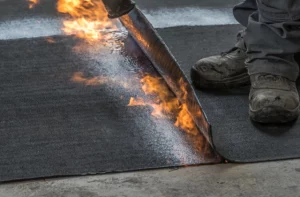
The installation process of torch down roofing involves a meticulous series of steps that guarantee a secure and durable application. First, the roof surface must be prepared, making sure it is clean and free of debris. Next, rolls of modified bitumen membrane are laid out, overlapping at seams to create a watertight barrier. A propane torch is then used to heat the underside of the membrane, allowing it to adhere to the substrate. Careful attention is paid to the edges and seams to confirm complete bonding. Finally, flashing is installed around penetrations and edges, providing additional protection against water infiltration. This systematic approach is essential to answer the question: How does torch down roofing work? It creates a reliable and resilient roofing solution.
Advantages of Torch Down Roofing for Longevity
When considering roofing materials, one must evaluate the numerous advantages of torch down roofing, particularly regarding longevity. This roofing system, composed of modified bitumen, offers exceptional durability against extreme weather conditions. Its heat-welded seams create a waterproof barrier that minimizes leaks, enhancing its lifespan considerably. Furthermore, torch down roofing is resistant to UV rays, which prevents degradation over time, maintaining structural integrity. The material’s flexibility allows it to expand and contract with temperature fluctuations, reducing the risk of cracking. Additionally, torch down roofing requires minimal maintenance, making it a practical choice for property owners seeking long-lasting solutions. Overall, these attributes position torch down roofing as a reliable option for those prioritizing enduring roof protection.
Common Challenges and Solutions in Torch Down Roofing
Despite the numerous advantages of torch down roofing, such as its durability and minimal maintenance requirements, several common challenges can arise during installation and maintenance. Recognizing these issues allows for proactive solutions to guarantee peak performance.
- Poor Adhesion: Inadequate heating can lead to insufficient bonding. Solution: Guarantee proper temperature control during installation.
- Ponding Water: Accumulation can cause membrane deterioration. Solution: Incorporate adequate drainage systems.
- Seam Integrity: Weak seams may lead to leaks. Solution: Utilize high-quality materials and professional installation techniques.
- UV Damage: Prolonged sun exposure can degrade materials. Solution: Consider reflective coatings or maintenance to mitigate UV effects.
Understanding how does torch down roofing work alongside these challenges enhances longevity and effectiveness, fostering a robust roofing solution.
Maintenance Tips for Ensuring Long-Lasting Roof Protection
To guarantee long-lasting roof protection, regular maintenance of torch down roofing is essential, as it considerably enhances the system’s durability and performance. Homeowners should conduct routine inspections to identify potential issues such as blisters, cracks, or seams that may have become compromised. Regularly clearing debris and guaranteeing proper drainage can prevent water accumulation and extend the life of the roofing material. Additionally, applying a protective coating every few years can safeguard against UV damage and weathering. It’s advisable to schedule professional evaluations periodically, as trained technicians can detect underlying problems that may not be visible. By adhering to these maintenance tips, homeowners can guarantee that their torch down roofing remains effective and resilient over time.
Frequently Asked Questions
What Materials Are Used in Torch Down Roofing?
Torch down roofing primarily utilizes modified bitumen membranes, reinforced with fiberglass or polyester. These materials guarantee durability, flexibility, and resistance to extreme weather conditions, providing an effective solution for long-lasting roof protection in various climates.
Is Torch Down Roofing Suitable for All Climates?
Torch down roofing is not suitable for all climates. It performs best in moderate to warm conditions but may face challenges in extreme cold or wet environments, potentially leading to reduced effectiveness and longevity.
How Long Does Torch Down Roofing Last?
Torch down roofing typically lasts 15 to 30 years, depending on installation quality, climate conditions, and maintenance. Its durability contributes to long-term roof protection, making it a popular choice among property owners seeking reliability.
Can Torch Down Roofing Be Repaired Easily?
Torch down roofing can be repaired, though the process requires specialized skills and materials. Proper assessment of the damage is essential, ensuring that any repairs effectively restore the roof’s integrity and longevity for peak performance.
What Is the Cost Comparison With Other Roofing Types?
The cost comparison of torch down roofing with other types typically reveals it as moderately priced, often more affordable than traditional materials like shingles, yet potentially higher than options like rolled roofing, depending on installation complexity and longevity.
Conclusion
In conclusion, torch down roofing offers a robust and reliable solution for long-lasting roof protection through its unique installation process and durable materials. The heat-welded seams provide exceptional waterproofing, while the flexibility and UV resistance enhance its lifespan. Despite potential challenges, proper installation and maintenance can mitigate risks, ensuring the integrity of the roofing system. Ultimately, torch down roofing stands as an effective choice for those seeking a resilient and enduring roofing solution.
You May Also Like To Read: